

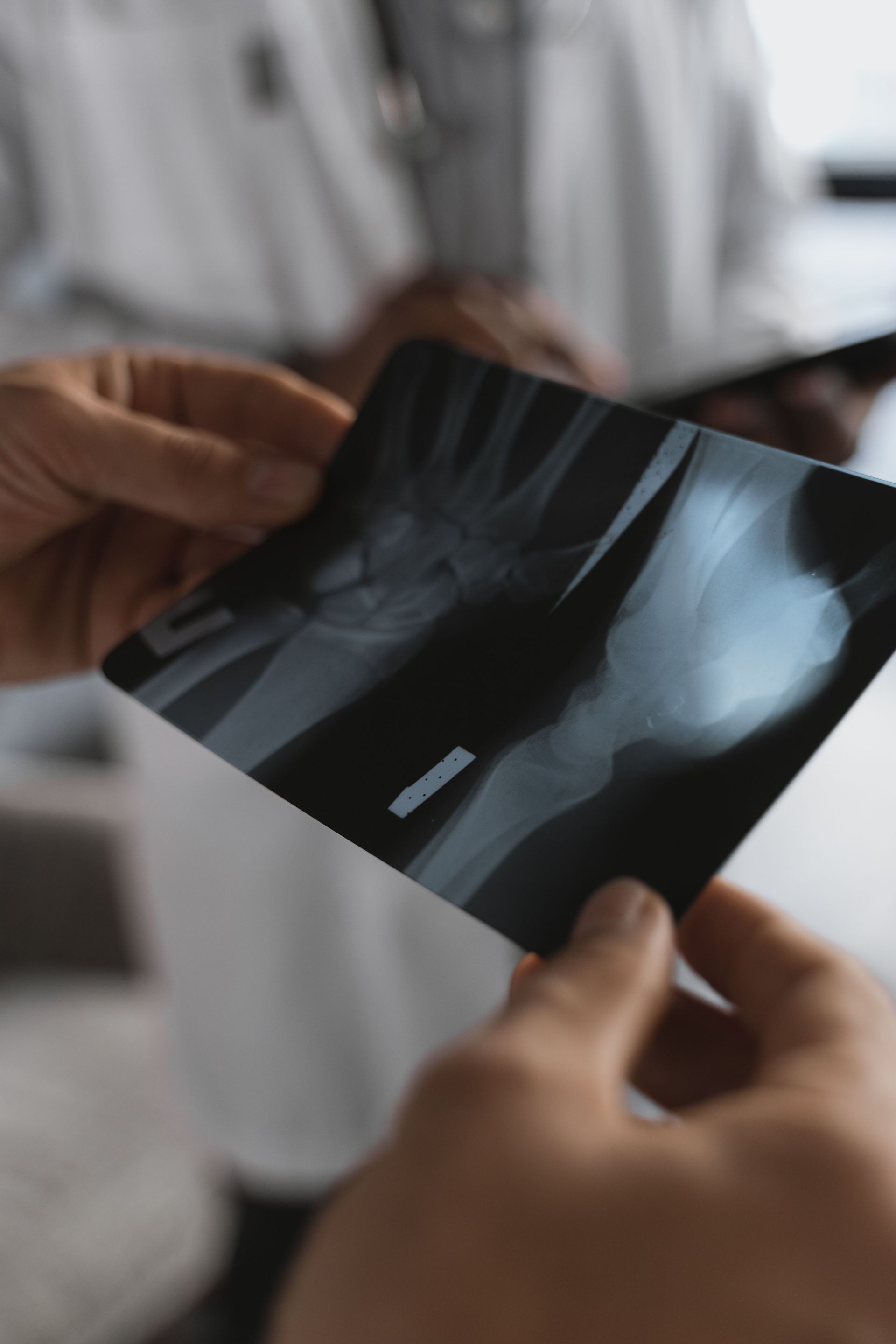
Baltimore County Broken Bone & Fracture Injury Lawyers
A broken bone at work can change your day in an instant. One minute you’re doing your job, and the next you may be facing an ER visit, time away from work, or other questions about how you’re going to recover.
Some fractures heal with time, while others require surgery, potential physical therapy, and can leave you with pain or limitations that last much longer than expected.
If you’ve broken a bone while at work in Maryland, you may be entitled to workers’ compensation benefits. So what should you do now? The team at Timothy A. Dachille & Associates
helps injured workers like you in Hunt Valley and throughout Baltimore County understand their legal rights and what to do next.
When a Broken Bone Becomes More Than a Temporary Injury
A cast or brace may be the first step after a fracture, but it doesn’t always mean you’ll be back to normal in a few weeks.
Depending on where and how badly a bone is broken, treatment may involve:
- Surgery
- Pins or other hardware
- Physical therapy
- Follow-up care
And even after your bone heals, you may still have pain, weakness, or limited mobility that affect your ability to do your job.
Your workers’ compensation claim should account for what the injury actually means for your recovery and ability to work, not just the diagnosis you received on the day of the accident.
Broken Bone and Fracture Cases We Handle
Broken bones can happen in nearly any workplace, from construction sites and warehouses to offices, hospitals, and restaurants. We help Maryland workers with fractures affecting different parts of the body.
Arm, Wrist & Hand Fractures
These injuries can make lifting, gripping, typing or operating equipment difficult and may require significant time away from certain jobs.
Leg, Ankle & Foot Fractures
A fracture that affects your ability to stand or walk can make returning to work difficult, particularly in jobs that keep you on your feet.
Hip & Pelvic Fractures
These can be serious injuries that require surgery, rehabilitation, and an extended recovery.
Facial & Skull Fractures
Falls, falling objects, and other workplace accidents can cause fractures to the face or skull and may involve additional injuries.
Rib & Sternum Fractures
These injuries can make everyday movement painful and may occur alongside other chest injuries.
Spinal & Vertebral Fractures
Fractures involving the spine can require extensive treatment and may result in lasting restrictions or limitations.
How Do Serious Fractures Happen?
You don’t have to work in a manual labor job or other traditionally dangerous industry to suffer a serious fracture on the job.
Work-related fractures can happen because of:
- Falls from ladders, scaffolding, or elevated work areas
- Slips, trips, and falls on the same level
- Construction and machinery accidents
- Falling equipment, materials, or other objects
- Car, truck, or motorcycle accidents that happen while someone is performing work duties
- Crush injuries and other workplace accidents caused by negligence
In Maryland, workers’ compensation generally applies to covered injuries that occur at work or while on the job. You don’t necessarily have to prove that your employer did something wrong to purpose workers’ compensation benefits.
If you’re unsure about whether your fracture is work-related or you simply aren’t sure what to do next, talking with a
Baltimore workers’ compensation lawyer can help you understand where you stand.
What Can You Recover After a Broken Bone Injury?
A work-related fracture can create expenses, while also keeping you from earning your regular payment. Maryland workers’ compensation may provide you with benefits to help with both while you recover.
Depending on your injury, benefits may include:
- Medical treatment: Hospital care, surgery, follow-up appointments, physical therapy, medications, and other necessary treatment related to your injury.
- Lost wages: If your fracture keeps you out of work or limits what you can earn while recovering, you may qualify for temporary disability benefits.
- Permanent disability: Some fractures leave lasting problems even after the bone itself has healed. Ongoing nerve pain or damage, numbness, weakness, limited movement, or loss of function may be relevant when determining whether you have a permanent disability.
- Vocational rehabilitation: If your injury prevents you from returning to your previous job, you may qualify for assistance preparing for other work.
How Our Broken Bone Injury Lawyers Can Help
When you’re recovering from a fracture, the last thing you need is another process to manage. Our team can handle the workers’ compensation side of things while keeping you informed about what’s happening with your claim.
- First, we start by understanding your claim, including learning about what happened, reviewing your injury and medical records, and helping you understand what benefits may be available.
- Then, we handle the details for you like gathering records and evidence, communicating with the insurance carriers, and addressing issues with treatment or benefits so you don’t have to navigate them on your own.
- If your claim is contested or your benefits are denied, we can help negotiate the claim and represent you before the Maryland Compensation Commission when necessary, so you remain supported every step of the way.
Frequently Asked Workers’ Compensation Fracture Questions
Who Is Responsible for a Broken Bone Injury?
Workers’ compensation generally doesn’t require you to prove your employer was negligent in your injury. The main question to consider is whether your fracture occurred at work or while performing your job.
How much is a broken bone injury claim worth?
While there is no standard value for a broken bone claim, your benefits can depend on your wages, medical treatment, time away from work, and whether the fracture caused permanent injury.
Can I recover compensation for future treatment or physical therapy?
Yes, necessary medical care related to a covered workplace fracture may include follow-up treatments and physical therapy.
What if I had osteoporosis or a previous injury before the accident?
A pre-existing condition doesn’t automatically prevent you from receiving workers’ compensation benefits. If the insurer questions whether your current condition is related to the workplace injury, medical evidence can become especially important.
When a Serious Fracture Disrupts Your Life, We’re Here to Help
A serious fracture can affect your life long after the initial accident, from ongoing medical care to time away from work.
Our team helps injured workers across Baltimore County and throughout Maryland understand their workers' compensation rights and what options they have moving forward. If you have questions about a broken bone you suffered at work,
contact our team today to schedule a free consultation.